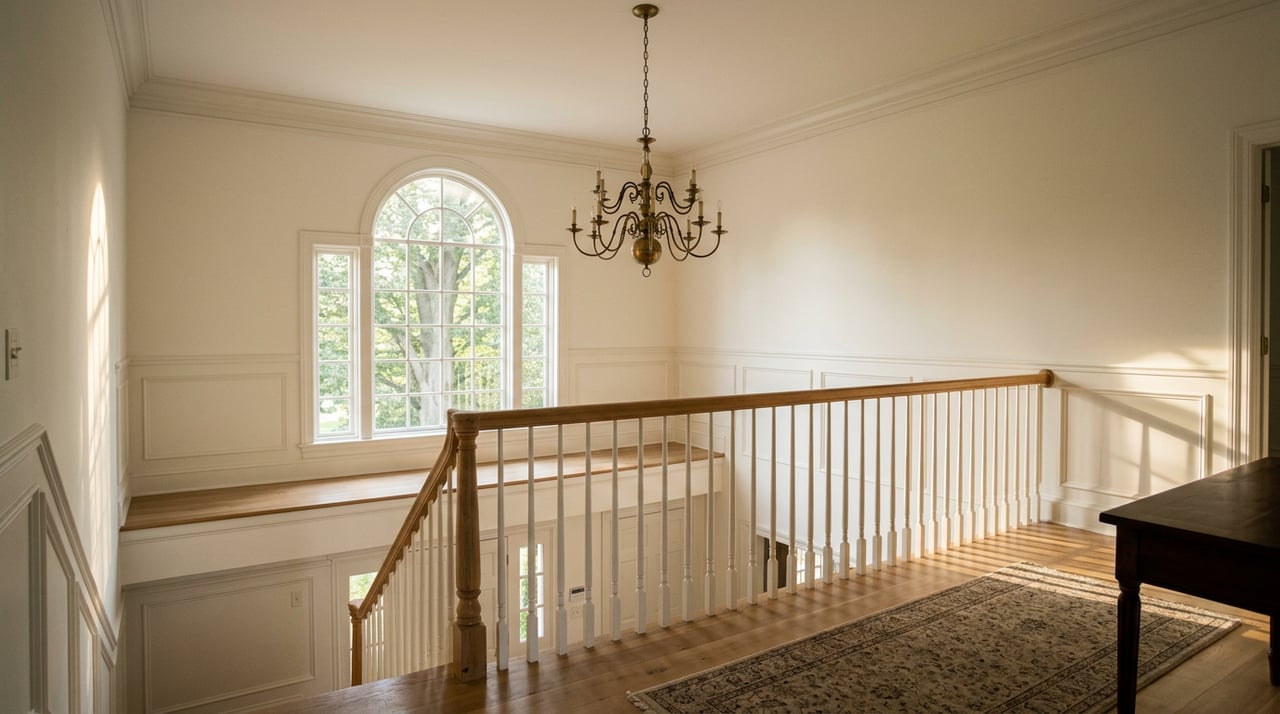
Two listings went live in the same week this summer. One was a two-bedroom condo in Dorchester, priced in the mid $500s, running close to $600 a square foot. The other was a single-family colonial in Newton, priced well over a million dollars. A buyer scanning both on the same afternoon could be forgiven for chalking up the gap to the obvious things: square footage, school catchment, the difference between a condo association and a deeded yard.
That read misses the actual mechanism. The gap between those two listings is not really about the houses. It is about two different supply systems that happen to share a media market and a set of portal filters, but behave nothing alike.
The number GBAR is watching, and why it moved
The Greater Boston Association of Realtors tracks this every month, and the April 2026 numbers are the clearest version of the split so far. The single-family median sale price across Greater Boston climbed to $1,032,500, up from $989,500 in April 2025. Over the same twelve months, the condo median moved to $750,000 from $732,000. That leaves a gap of roughly $280,000 between the two property types, and it is not a new phenomenon so much as an accelerating one.
The instinct is to explain that gap with quality: houses come with land, condos come with a fee. That is true, but it is not why the gap is widening right now. The reason is that one side of this market can expand and the other effectively cannot.
Why condos can grow and houses can't
As of the first quarter of 2026, condo inventory across Boston was up roughly 15 percent year over year, and that growth is visible if you know where to look. The Seaport has spent recent years absorbing large-scale condo towers like Echelon Seaport, 22 Liberty, and One Seaport Square, the kind of buildings that add hundreds of units to a submarket in a single delivery. Each new tower represents square footage that simply did not exist for buyers to compete over a few years ago.
Single-family homes do not have an equivalent pipeline. In Newton, Brookline, Belmont, and the other inner-ring suburbs that feed Boston's single-family stock, the land was subdivided decades ago. There is no tower you can build to add forty new colonials to Brookline in a year. Listings there have not kept pace with household formation since 2022, and the arithmetic is simple: demand for single-family homes near Boston keeps growing, the physical supply of lots does not, and the price gap absorbs the difference.
This is the part worth sitting with if you are comparing a condo to a house across neighborhoods. You are not just comparing two products. You are comparing a market that can respond to demand with new construction against one that structurally cannot.
What a dollar buys, block by block
The same elastic-versus-frozen story plays out inside the condo market too, and it is sharper than most buyers expect. As of the mid-2026 market data, core areas like Beacon Hill, Back Bay, and the Seaport command price-per-square-foot averages above $1,000, while Dorchester, East Boston, and Hyde Park trade closer to $600 a square foot. That is not a modest spread. It means the same $750,000 that buys roughly 750 square feet in Beacon Hill can buy closer to 1,200 square feet in East Boston.
One 2026 mid-year market analysis put it plainly: the neighborhood pricing spread within Boston is now wider than at any point in the past decade. That is worth pausing on, because it is easy to read "Boston condo market" as a single line on a chart when it is really a half dozen submarkets that happen to share a zip prefix.
The core neighborhoods hold their premium for reasons that have nothing to do with square footage. Back Bay's brownstones are a defining part of the neighborhood, and the Back Bay Architectural Commission reviews exterior changes including windows, doors, and facades. Midtown, the corridor where Back Bay meets the Fenway around the Prudential Center and Copley Square, carries a similar premium anchored by One Dalton, the 61-story glass tower completed in 2019 and managed by the Four Seasons, home to 180 condominium units and the tallest residential building in the city. The Seaport's premium follows the same logic: newer buildings, higher-spec finishes, and the same concentrated high-wage employment base, biotech, finance, and healthcare, that supports premium pricing across Boston's core.
Dorchester and East Boston carry lower per-square-foot pricing not because the neighborhoods lack demand, but because their stock looks different. Dorchester's condo market runs from renovated two-bedrooms in Savin Hill priced between $550,000 and $750,000 up to new-construction three-bedrooms in Ashmont pushing past $900,000, with the Red Line anchoring the corridor. East Boston is still absorbing new mid-rise construction along the Jeffries Point waterfront next to older, restored townhouses around Maverick Square, a mix that keeps its per-square-foot average well below Beacon Hill's even as its median list price has climbed to roughly $790,000, up 3.9 percent year over year.
None of that means the cheaper submarkets are a bargain waiting to be discovered. It means they are answering a different question than Beacon Hill is.
The part of the story where even the trackers disagree
If you pull two different market reports for Boston this summer, you will get two different readings of how tight the market actually is. One report covering August 2026 puts Boston at roughly 4.3 months of supply, which reads as a balanced market. A mid-2026 report from another tracker puts the same city closer to 6.9 months, which would technically favor buyers. Both can be true at once, because they are measuring different slices of the same split market. Redfin's numbers for the three months ending June 2026 show homes across Boston selling in about 23 days, receiving roughly 2 offers on average, with a median sale price of $860,000, up 2.9 percent year over year. That reads like a market with real competition. It is, if you are shopping the segments where supply is frozen.
If you are shopping the segments where supply is elastic, the picture softens. More condo inventory means more room to negotiate, longer time to decide, and less pressure to waive contingencies. The same city, the same month, two different negotiating postures depending on which side of the split you are standing on.
Reading a listing correctly across submarkets
For a buyer moving from Back Bay's brownstones to a Newton colonial, or coming in from outside New England entirely, the practical takeaway is straightforward:
- Compare price per square foot within the same property type and the same submarket tier, not across the citywide median. A condo in East Boston and a condo in Beacon Hill are not competing for the same buyer or the same inventory pipeline.
- Ask which side of the elasticity split you are on. If you are looking at single-family stock in the inner-ring suburbs, expect the tighter, faster-moving market Redfin's data describes. If you are looking at newer condo product in the Seaport or Midtown, expect more room to negotiate than the headline competitiveness score suggests.
- Treat the citywide median as a starting point for a conversation, not a number to anchor an offer to. It is an average of two markets moving at different speeds, and neither speed is the one you will actually experience at the closing table.
Boston's median price is not lying to anyone. It is simply describing something broader than any single buyer is actually shopping for. The neighborhood-level numbers are where the real decision gets made, and those numbers are moving further apart, not closer together, as 2026 goes on.
If you are trying to figure out which side of that split fits your search, or you are weighing a move from a Boston condo into a Southern New Hampshire property with more land and a different pace entirely, Cheryl Zarella & Associates can walk through the current numbers for the specific submarkets you are comparing. Request a complimentary home valuation when you are ready to see where your own property sits inside this split market.
This article is general information, not legal, tax or financial advice. Consult a qualified professional about your situation.