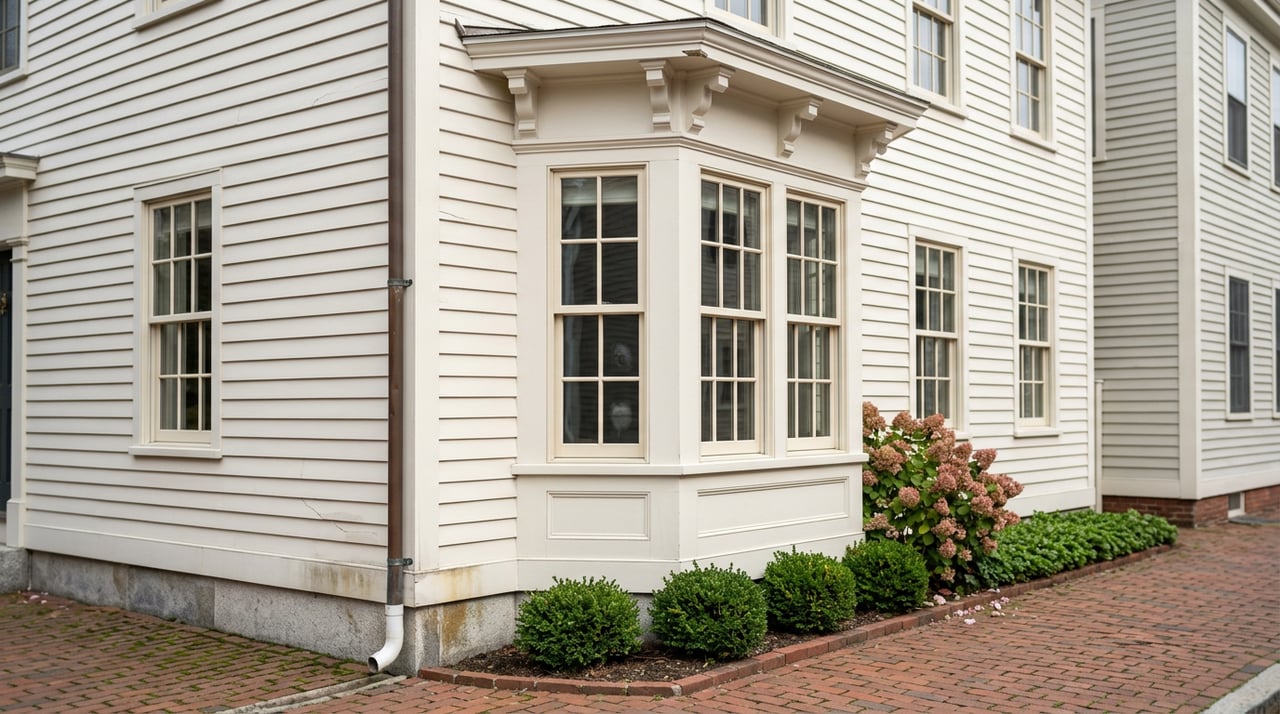
What happens when the inspection passes, the financing clears, the sellers accept your offer, and you still cannot touch a window for six weeks?
For most Portsmouth buyers, that question never comes up. But for anyone closing on a property inside the city's mapped Historic District, the timeline that actually governs the first year of ownership is not set by a lender or an inspector. It is set by a seven-member volunteer board that meets once a month, on its own calendar, regardless of what your purchase and sale agreement says about move-in dates or renovation budgets.
The board that outranks your inspector
Portsmouth's Historic District Commission is made up of seven members and two alternates, and it typically meets the first Wednesday of each month, with a second Wednesday added when the agenda runs long. Any exterior change to a structure inside the district requires what the city calls a Certificate of Approval before work can begin.
The district itself is not one contiguous neighborhood. It covers five distinct areas: the North End, Christian Shore, downtown, the South End, and the West End, which was added to the district in 2010 and includes the Islington Street corridor. A house two blocks apart from another can sit inside the boundary while its neighbor does not, which is the first thing worth confirming before writing an offer with renovation plans attached.
What actually needs the board's sign-off
The trigger is visibility, not scope. Interior renovations to a single-family home generally bypass the zoning review that historic properties face on the outside. What does require a hearing includes windows and window treatments, doors, trim, and any building element that changes in shape or form. Reroofing counts too, but only if the new material differs from what is already there. Swap slate for architectural shingle and the commission wants to see it first.
That distinction is worth sitting with. The board is not regulating your kitchen or your closets. It is regulating the thing every future buyer, and every neighbor walking past, will actually see.
"The project would preserve the integrity of the District."
That line comes from the commission's own November 2020 meeting minutes, offered by member Ruedig in support of an application. It is a useful way to understand the standard the board applies: not whether a change is reasonable to the homeowner, but whether it holds up against the street it sits on.
The clock the state made faster doesn't apply here
New Hampshire passed a permitting reform in 2025 that requires standard building permits to be issued within 14 days when an applicant uses an approved third-party review agency, with fees cut by as much as 80 percent in that scenario. It is a real change, and it has shortened timelines for a lot of renovation projects across the state.
It does nothing for a Certificate of Approval. That review sits outside the building permit process entirely. It is decided by a citizen board with a fixed monthly meeting schedule, not a permit desk with a statutory clock. A buyer who assumes the state's reform sped up their entire project has usually only sped up the part of the process that was never the bottleneck.
What a teardown actually has to clear
On April 1, 2026, the commission held a work session on an application from the Robert M. Snover Revocable Trust for a property at 58 Humphrey's Court. The request: demolish the existing single-family home and build a new multi-family dwelling in its place. The parcel sits within both the General Residence B zoning district and the Historic District.
A work session is a preliminary conversation, not a formal hearing or a decision. It is the first stop, not the last one, and any formal application still has to move through the commission's regular monthly cycle from there. More than four months have passed since that April session, which gives a sense of how much runway a project like this needs even before construction can start. If a full teardown has to clear this board one monthly meeting at a time, a window swap or a rear addition is not getting waved through any faster.
How specific the board actually gets
The same November 2020 meeting that produced the integrity-of-the-district comment also shows how granular the review can be. One applicant, Jessica Kaiser, told the board her home's existing slate roof was sliding off due to age and poor condition, and asked to replace it with asphalt shingle. A separate application that night involved a rear addition where the window design submitted did not match what the board had approved previously. That mismatch sent the item back for a separate vote rather than a routine sign-off. Elsewhere in the same meeting, a straightforward window replacement, described in the minutes as white on white and fiberglass clad, passed 6-1, with one member, Adams, voting against it after a discussion about matching the muntin bar width to the original.
None of this is unusual for the district. It is the ordinary texture of how the board works, and it means a buyer planning even a modest exterior update should expect a real conversation about material and detail, not a stamp on a form.
What that costs at this price point
Portsmouth's downtown submarket is not a place where a few extra months of carrying costs are trivial. The most recent published figure for that specific area, as of August 2025, put the median sale price at $815,000, with homes typically selling in about 22 days. By December 2025, the citywide median had climbed to about $875,000. Both numbers will have moved by the time you are reading this, which is exactly the point: verify current pricing with a local agent rather than treating any single snapshot as gospel, but do the math on what an extra review cycle or two actually costs in interest and holding expenses before you assume a September closing means October construction.
A new map for figuring out which board you even need
The city recently published an online guide to help residents determine whether a given project needs the Planning Board, the Zoning Board of Adjustment, or the Historic District Commission, since projects inside the district can trigger more than one review depending on scope. It will not shorten the commission's calendar, but it at least removes the guesswork about which door to knock on first.
Before you write the offer
- Confirm whether the specific parcel sits inside one of the five historic sub-districts. Not every Portsmouth address does, even downtown.
- Ask whether a Certificate of Approval application is already on file for the property. The case attaches to the address, and agendas and minutes are public record.
- Check the commission's meeting calendar before setting a renovation start date. It meets once a month, and agenda items can get pushed to the next cycle.
- Assume any exterior scope, including a like-for-like reroof in a different material, needs a hearing rather than a quick sign-off.
- Have a contractor or architect familiar with the district review your plans before submission. A first-round revision request adds another full month to the timeline.
A few questions worth answering directly
Does every historic Portsmouth home need Historic District Commission approval for renovations? Only exterior changes trigger a Certificate of Approval. Interior work on a single-family home generally bypasses that review and moves through the standard building permit process instead.
Does the state's 2025 permitting reform speed up Historic District Commission review? No. That reform applies to standard building permit issuance timelines. A Certificate of Approval is a separate design review decided at the commission's own monthly meeting.
Can I find out if a pending application is attached to a house I'm considering? Yes. Commission agendas and minutes are public, and reviewing them before or during due diligence is a reasonable step for any buyer planning exterior work.
If you are weighing a historic Portsmouth purchase and want to understand what a specific address's district status and renovation timeline could look like, or if you are on the other side of this and considering whether now is the moment to sell before someone else takes on that calendar, start with a conversation. Cheryl Zarella & Associates can walk through the details property by property, and if selling is part of what you're weighing, you can request a complimentary home valuation to see where you stand.