The Union Leader reported that Andy Santo was filling up at the Mobil station off Exit 3 when a reporter caught him mid-fill. He'd been watching the highway crews work through his commute for years. The report quoted him describing the widened lanes finally opening beneath him: "It relieves a lot of pressure." He wasn't talking about real estate. He was talking about traffic. But Exit 3 sits in Windham, and what happens at that interchange has more to do with home prices in this town than almost anything else in the local market conversation.
That conversation, if you have spent any time comparing Windham to Salem or Derry, usually turns to a phrase that gets repeated with more confidence than evidence: commuter rail is coming. It's an appealing idea. It also is not what is driving what buyers actually pay to live at Exit 3, and understanding why matters if you are comparing these three I-93 towns on price alone.
The dollar gap is real and it isn't subtle
Start with what's unambiguous. Local MLS data tracked through 2026 puts Windham's single-family median sale price at $785,000 year to date, following a full-year 2025 median of $811,000. Derry's median sale price over the three months ending May 2026 was $463,000. Salem's median list price sat at $619,900 in the same general window. Windham isn't running a modest premium over its I-93 neighbors. It's running a gap measured in hundreds of thousands of dollars.
If you only look at that number, the obvious story writes itself: Windham must be pricing in something Salem and Derry don't have yet, and the easiest candidate is the long-promised passenger rail service that keeps appearing in New Hampshire transportation headlines.
Per square foot, the story gets messier than the median suggests
Here's where it gets interesting, and where the "obvious" explanation starts to wobble. If Windham buyers were truly paying a premium for some future catalyst, you'd expect that premium to show up consistently in the price per square foot, not just the total price. It doesn't.
Redfin's closed-sale data for the three months ending May 2026 put Windham's median sale price per square foot at $300, while Derry's median sale price per square foot for the same window came in at $311, higher than Windham. Movoto's list-price figures for roughly the same period tell a different story, showing Windham at $322 per square foot against Derry's $297. Two respected sources, two different rankings, same two towns, same general stretch of 2026.
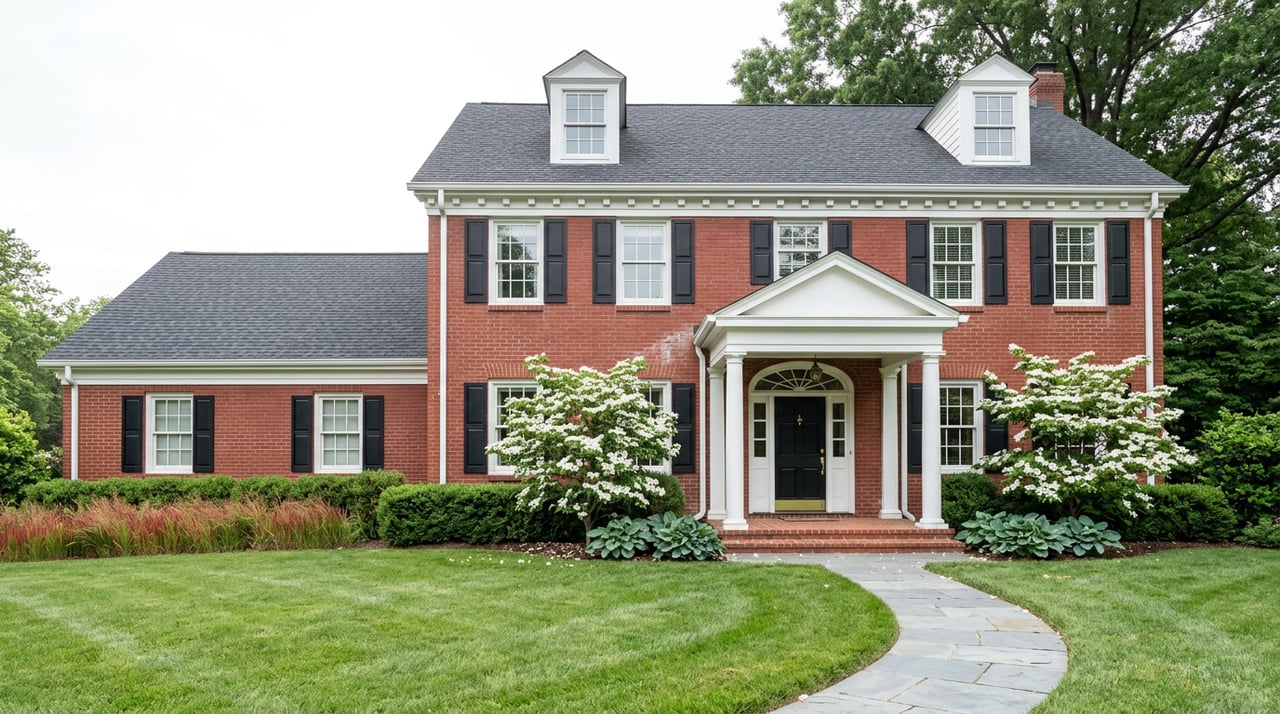
That contradiction is itself the finding. If the per-square-foot premium can't even agree on which direction it runs, it isn't really a per-square-foot story at all. What's consistent across every source is that Windham's houses, and the lots under them, simply run bigger. Local brokerage data describes new construction in town leaning toward larger, upgraded colonial-style homes rather than entry-level product. A bigger house on a bigger lot costs more in total even when the underlying dollar-per-foot value is comparable to the town next door. Windham's price tag is mostly a size story wearing a location story's clothes.
The promise baked into the median strip
So where does the rail idea even come from, and why does it feel so tied to Windham specifically? The answer is buried in an infrastructure decision made more than fifteen years ago.
When New Hampshire's Department of Transportation designed the $770.5 million widening of I-93 from the Massachusetts line to Manchester, a project that stretched from roughly 2009 until its final audits wrapped in the spring of 2021, planners didn't just add lanes. The state's own project documentation describes new park-and-ride lots built at Exits 2 and 5, one planned for Exit 3, and notes that within the highway median, space is "reserved to accommodate future commuter rail trains."
Exit 3 is Windham's exit. For over a decade, anyone who drove past that stretch of highway has been driving past a literal, physical placeholder for a train that has never arrived. It's easy to see how "there's room reserved for rail right at my exit" turns into "rail is coming to my town." The infrastructure has been sitting there since before some current buyers had a driver's license.
The train that finally got funding is headed somewhere else
Here's the part that changes the calculation for anyone weighing this seriously. In August 2026, U.S. Representative Maggie Goodlander secured $250,000 in federal funding through the fiscal year 2026 appropriations process to update ridership and cost estimates for a rail proposal. That's real, current money, and it's the most tangible movement this idea has seen in years.
It's also not for Windham's corridor. The funded work covers what officials are calling the "Nashua initial operating segment," extending Massachusetts Bay Transportation Authority service roughly 13 miles north from Lowell using an existing rail corridor owned by CSX, a completely different rail line than the I-93 median that runs past Windham. The plan calls for two stops, one in South Nashua near the Pheasant Lane Mall area or the former Dow Chemical site off East Spit Brook Road, and another downtown at the city-owned Crown Street property. Windham is roughly 10 to 12 miles east of that alignment. The highway median reservation and the currently funded rail segment are two different projects tied to two different corridors, and only one of them has money behind it right now.
Zoom out further and the pattern holds. Passenger rail service north of Lowell ceased entirely in 1967. Serious studies into restoring it have surfaced roughly every few years since at least 2007, each one stalling on cost before construction ever began. The Nashua segment getting attention now is explicitly described by officials as an initial phase, one that would need to prove itself before anyone seriously discusses extending toward Manchester, let alone toward the Windham side of the interstate. If you are pricing a Windham property today against the assumption that rail access is a near-term catalyst, the current, funded, on-the-record version of this project doesn't reach you.
Where the real, durable premium actually sits
None of this means Windham's higher prices are unjustified. It means the justification is already finished construction, not future transit.
The widening that runs past Exit 3 is done. Four lanes each way, from the Massachusetts line through Windham's stretch of the corridor, have been open since the project's 2021 completion, cutting the drive to Boston to roughly 45 minutes depending on traffic. That's a commuting advantage buyers can use today, not one they're speculating about.
The other durable driver is water. Cobbetts Pond, the 302-acre lake that anchors Windham's waterfront market, produces sale prices that dwarf the town median on a square-foot basis. A three-bedroom home on Cobbetts Pond Road, 2,176 square feet on a 0.7-acre lot with 88 feet of direct frontage, sold for $1,475,000 in March 2026, north of $650 per square foot. That's not a highway premium or a rail premium. That's a lake premium, and it's the same kind of premium you'd expect to see on any well-regarded lake in the region, rail or no rail.
What this means when you write the offer
If you're comparing Windham to Salem or Derry, a few things are worth carrying into your search rather than into your assumptions:
- Compare houses by size and lot first. Windham's total price gap over Derry and Salem shrinks considerably once you control for square footage and land, because that's what most of the gap is made of.
- Don't let "commuter rail" enter your reasoning about long-term value at this exit. The only currently funded piece of that plan serves Nashua, not Windham, and it's an initial phase even there.
- If waterfront is part of your search, price Cobbetts Pond properties on their own curve. The lake premium is real, established, and separate from anything happening on the interstate.
- Treat the finished I-93 widening as the actual infrastructure story here. It's complete, it's measurable in drive time, and it's already reflected in what sellers are asking.
None of this is a reason to avoid Windham. It's a reason to make sure the number you're paying reflects what's actually built rather than what's been discussed in transportation meetings since before the current widening project even broke ground.
FAQ
Does Windham have a train station planned? No station is currently funded or planned within Windham. The only actively funded rail work in the region is a proposed Nashua segment using a different rail corridor roughly 10 to 12 miles west of Windham's I-93 alignment.
Does Windham cost more per square foot than Derry? The evidence is mixed. Different data sources disagree on whether Windham's per-square-foot price actually exceeds Derry's, which suggests the real gap in total price comes more from home and lot size than from a location premium.
Is the I-93 widening near Windham finished? Yes. The widening from the Massachusetts line to Manchester, including the Exit 3 interchange in Windham, reached completion with final audits closed out in spring 2021.
If you're weighing Windham against its neighbors and want a read on what a specific property's price actually reflects, Cheryl Zarella can walk through the comparison with you. Request a complimentary home valuation to start with real numbers instead of assumptions.